


Smelly Armpits? Tips to Tackle Armpit Odor
KEY TAKEAWAYS
- Sweat doesn't really smell. Armpit odor starts when bacteria on your skin break down the sweat produced by your apocrine glands.
- Hormonal changes, including puberty, your cycle, pregnancy, and menopause, can change how your armpits smell.
- Lifestyle habits like food and stress can also play a part.
- A daily cleansing routine and the right underarm product can help you manage odor.
- If armpit odor changes suddenly, or comes with other symptoms, let your doctor know.
Armpit odor is something most of us deal with, and it's influenced by many things: lifestyle, hormones, and simple biology. Basically, bacteria meet sweat, and odor shows up.
How you smell can also change over time. Here's what causes armpit odor and how to build a routine that helps you feel fresh and confident.
Why Do Your Armpits Smell? Understanding the Biology
Ever wondered what causes armpit odor? While sweat seems obvious, sweat is mostly odorless. Odor starts when bacteria on your skin break sweat down.
The underarm environment gives bacteria everything they need to thrive: warmth, moisture, and limited airflow. Your underarms and groin are also home to apocrine glands, which produce a thick sweat containing fats and proteins that bacteria especially love. The rest of your body has eccrine glands that produce a watery sweat to cool you down when you’re hot or active.
And does armpit hair cause odor? Not directly, but it holds moisture close to the skin and gives sweat and bacteria more places to collect.
Odor also varies from person to person. As Unilever R&D Manager David Waters explains, "Odor depends on bacteria and sweat composition, not volume, so shifts in hormones, diet, stress, or hygiene can change which bacteria thrive, even when the amount of sweat stays the same."
How Hormonal Changes Affect Armpit Odor
Female body odor and sweating tend to shift according to your hormones. “Hormonal changes can affect the body’s internal thermostat, so sweating may change during different life stages,” David explains.
During puberty, apocrine glands begin functioning for the first time, which is why body odor often becomes noticeable around adolescence.¹
“Pregnancy can increase feelings of warmth and sweating, menstrual-cycle hormone shifts can cause temporary changes in body temperature, and menopause can trigger hot flashes and night sweats as estrogen levels fluctuate and decline,” adds David.
But not all changes are hormonal. Certain medications can also change how you smell.¹ If you notice sudden body odor changes after starting or switching a medication, mention it to your doctor.
How to Get Rid of Armpit Odor Step by Step
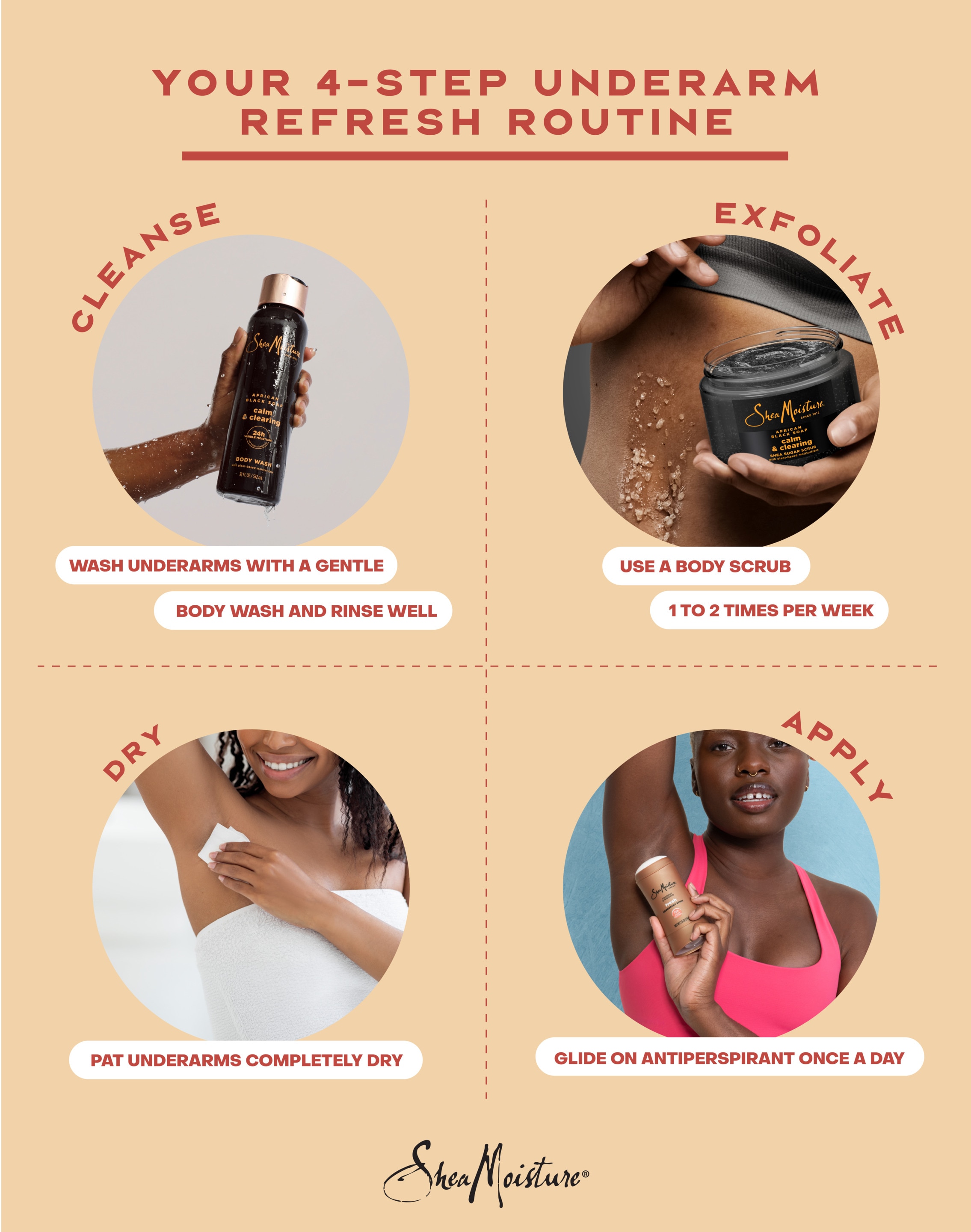
- Start with a daily shower or bath routine, since washing away sweat and buildup is one of the best ways to manage armpit odor.
- A body wash provides a good lather and should cleanse well but leave your skin feeling soft and moisturized.
- Prefer a bar soap? Look for one designed for melanin-rich skin with built-in moisturizers for gentle cleansing.
- Weekly exfoliation with a body scrub removes dead skin cells and product buildup. Be gentle on your underarms using your hands or a washcloth and wait a day after shaving before you exfoliate.
- Shaving removes hair that bacteria can cling to, and this helps sweat evaporate more quickly, but it won't resolve odor on its own.
- When it comes to choosing a deodorant and antiperspirant for armpit odor, the two formulas have different jobs. Deodorant tackles odor, while an antiperspirant temporarily reduces underarm sweat.
- How you apply antiperspirant matters. Put it on clean, dry skin, preferably at night before bed when you generally sweat less. This gives the active ingredient a head start.
LIFESTYLE HABITS
Lifestyle habits count too. Cutting back on sulfur-rich foods like garlic and onions can help, since what you eat can change how you smell.
Caffeine, alcohol, and spicy foods can make you feel hot and sweat more, while stress activates your apocrine glands. Reducing your dietary triggers and stress can help.¹ But none of this works overnight. Give it time and be consistent.
How to Remove Armpit Odor From Clothes
Sometimes the odor lingers in your clothes even after they’ve been washed. Here’s what to do:
- Pretreat stains with white vinegar or a baking soda paste before washing
- Wash in warm, not hot, water, since heat can set odor-causing compounds into fabric
- Add an enzyme-based detergent to break down the protein residue left by sweat
- Air dry and check that the odor is fully gone before tumble drying
- Rotate your tops if you sweat heavily
FAQs
WHY DO ARMPITS SMELL WORSE THAN OTHER PARTS OF THE BODY?
Apocrine sweat glands in your underarms produce a thick, protein-rich sweat that bacteria break down into odor. These glands are also found in your groin. The rest of your body has eccrine glands that produce a watery sweat to cool you down. This sweat remains mostly odorless.
DO MEN AND WOMEN HAVE DIFFERENT ARMPIT ODORS?
Men tend to deal with body odor more than women. That’s because they have more body hair and more apocrine glands.¹
WHAT'S THE DIFFERENCE BETWEEN DEODORANT AND ANTIPERSPIRANT, AND WHICH IS BETTER FOR ARMPIT ODOR?
Neither is better, since they do different jobs. If odor is your main concern, a standard deodorant is a good fit. For wetness and odor, an antiperspirant can help.
DO I NEED TO SHAVE MY UNDERARMS TO REDUCE ODOR?
It can help a little, since there's less hair for sweat to cling to. If you do shave, go gently, since over-shaving can lead to irritation, ingrown hairs, or dark marks.
HOW OFTEN SHOULD I APPLY DEODORANT OR ANTIPERSPIRANT?
Once a day is typically enough, applied to clean, dry skin after your shower.
WHY DOES ARMPIT ODOR COME BACK AFTER A SHOWER?
A shower washes away sweat, but your skin is naturally covered in bacteria, and fresh sweat starts the process again. Antiperspirant reduces sweat only temporarily, and clothes can hold onto sweat, so wearing clean clothes matters too.
Sweating is a natural part of how your body works, so managing odor isn't about fighting it. It's about finding the few small habits that fit your life and letting them become part of your day.
References


Dive into more self-care tips and how-to guides.


- slide 1
- slide 2
- slide 3