

Healthy, smooth, radiant skin starts with a routine that treats your body with the same level of care as your face. Exfoliation plays a major role in that routine. It helps lift away dead skin cells, softens rough patches, and keeps your glow consistent from head to toe. For many Black women, exfoliation also supports an even skin tone and helps manage areas that deal with dryness, texture, or dullness. Once you understand how to exfoliate the right way, your body care routine becomes easier and more effective.
Body exfoliation removes dead skin cells from the surface of the skin. You can exfoliate with physical exfoliants or chemical exfoliants. Physical exfoliants use texture to buff away buildup. These include scrubs and tools like loofahs or exfoliating mitts. Chemical exfoliants use ingredients like AHAs and BHAs to dissolve dead skin cells.1
Exfoliation supports skin renewal by clearing the path for fresh, healthy cells to come forward. For melanin-rich skin, this matters because a gentle, consistent exfoliation routine helps your skin look smoother, brighter, and more even.
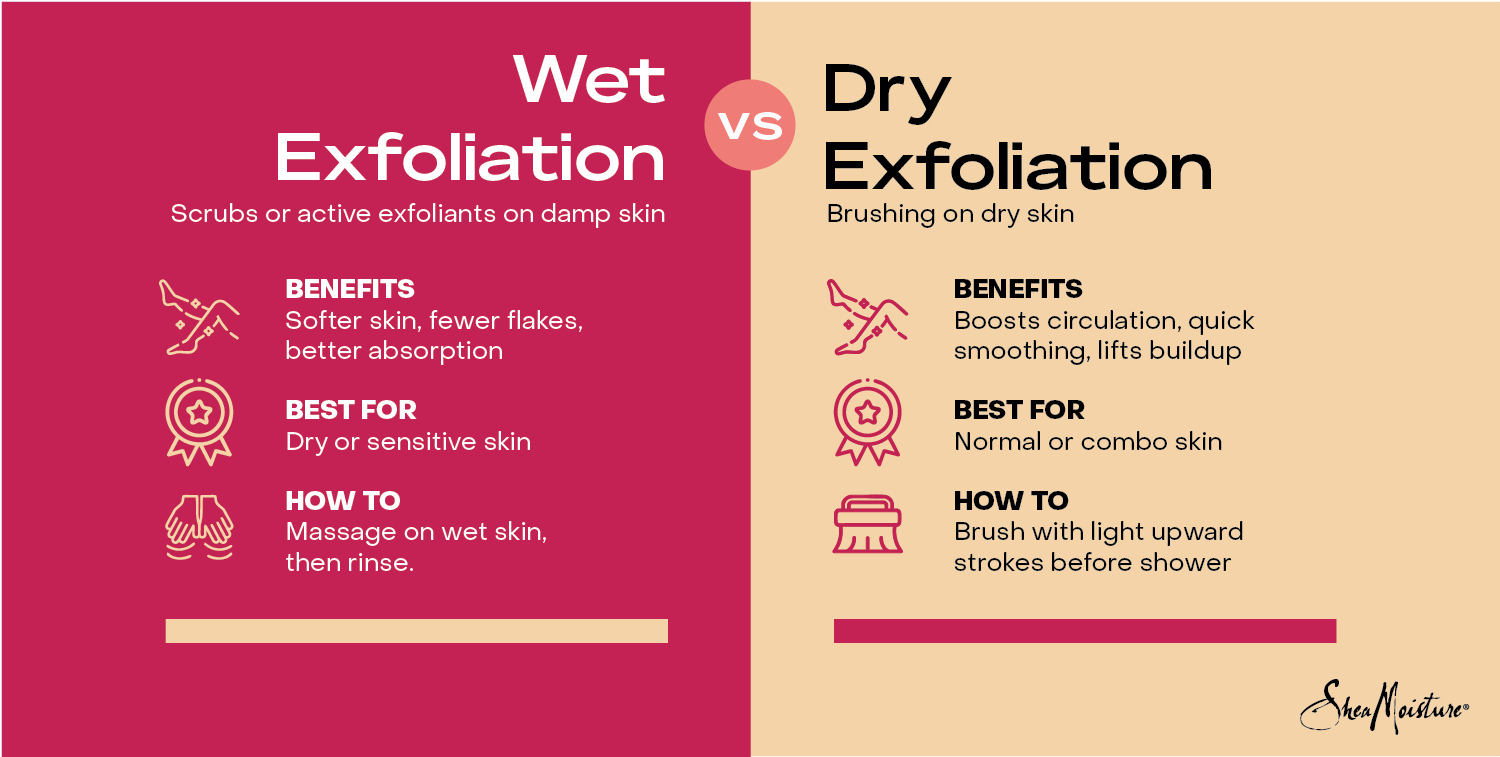
Dry exfoliation and wet exfoliation work differently, even though both help you shed dead skin cells and smooth rough areas.
Dry exfoliation is done on completely dry skin, usually with a dry brush. Because there’s no water involved, the bristles grip the skin more easily, sweeping away loose buildup and giving you that quick, invigorating, circulation-boosting feel. It’s great for normal or combination skin and works well as a pre-shower step since it preps the skin before cleansing.
Wet exfoliation happens when your skin is damp, typically in the shower or bath. Warm water and steam soften the outer layer of skin, which makes exfoliation gentler and more hydrating. You can use sugar scrubs, exfoliating mitts, or chemical exfoliants designed for the body. Scrubs melt into softened skin to smooth flakes and add moisture with nourishing ingredients like raw shea butter, manuka honey, African Black Soap, and coconut oil. Exfoliating mitts give you mechanical control. Wet exfoliation is especially helpful for dry or sensitive skin because the added moisture creates a cushion, reducing friction and irritation. It also helps products absorb better afterward.
In short: dry exfoliation energizes and lifts buildup before you shower, while wet exfoliation focuses on softening, smoothing, and hydrating once your skin is already warmed up.
By removing dead skin cells, your body feels soft to the touch. And spots like your elbows, knees, and heels? They love consistent exfoliation and show results fast.
Many women deal with ingrown hairs on legs, underarms, and the bikini line. Gentle exfoliation keeps pores clear, which helps minimize trapped hairs and rough bumps. A sugar-based exfoliating scrub works well for this because it softens the skin while lifting away buildup.
Hyperpigmentation often shows up in the form of dark spots, patches, or uneven tone. Exfoliation removes surface dead skin cells, which can make dark spots appear slightly lighter over time because it speeds up cell turnover.
When skin has a layer of dead skin cells sitting on top, moisturizers struggle to sink in. Exfoliation clears that barrier so body oils, lotions, and creams can absorb easily. This gives your skin a smoother, nourished finish.
Start with a gentle body wash or cleansing bar. Cleansing removes buildup and help prep your skin for the next step.
Use circular motions to buff away dead skin. Stay gentle, especially on arms, thighs, and underarms. Glide across your skin without pressing too hard.
Warm water helps lift your exfoliating product and loose skin cells from your skin. Pat dry with a soft towel to maintain hydration.
Apply lotion or body oil while your skin is slightly damp. This locks in moisture and helps your skin stay soft all day.
Different parts of your body need different levels of exfoliation, so here’s a simple guide to how often each area should get attention.
Exfoliate two to three times weekly for smooth texture.
One to two times weekly keeps skin balanced.
Three to four times weekly helps maintain softness. Focus on heels and rough spots.
Use a gentle exfoliating scrub one to two times weekly.
Use a sensitive approach. Limit exfoliation to once weekly to avoid irritation.
A few small missteps can make exfoliation less effective, so keep these common mistakes in mind to protect your skin and get the best results.
Scrubbing too hard can irritate the skin. Gentle pressure works best.
Daily scrubbing with rough tools can lead to dryness. Keep it balanced.
Freshly shaved skin needs time to settle. Exfoliate the day before shaving or wait 24 hours after shaving.
Moisturizing after exfoliation helps your skin stay soft and balanced.
A smooth, even glow starts with showing your skin a little extra care, and exfoliation is the way to make that happen. Once you understand the right techniques and find products that work with your body, your routine becomes simple, consistent, and genuinely enjoyable. With the right approach, exfoliation becomes more than a quick shower step. It turns into a moment that celebrates your skin and keeps it looking healthy from head to toe.
Dive into more self-care tips and how-to guides.