


TRANSITIONING YOUR ROUTINE BETWEEN SEASONS

Seasonal changes affect how your skin behaves. From summer’s heat to winter’s dryness, melanin-rich skin can experience increased sweat, dehydration, and sensitivity. This makes adjusting your routine essential to repairing your skin barrier, locking in moisture, and keeping things balanced year-round.
HOW SEASONAL SHIFTS AFFECT SKIN HYDRATION
Melanin-rich skin has unique needs, especially when it comes to staying hydrated. In summer, higher temperatures and humidity increase sweating, which can strip your skin of its natural oils and lead to dryness and irritation. This is when introducing lightweight, hydrating products can help to replenish moisture without clogging your pores.
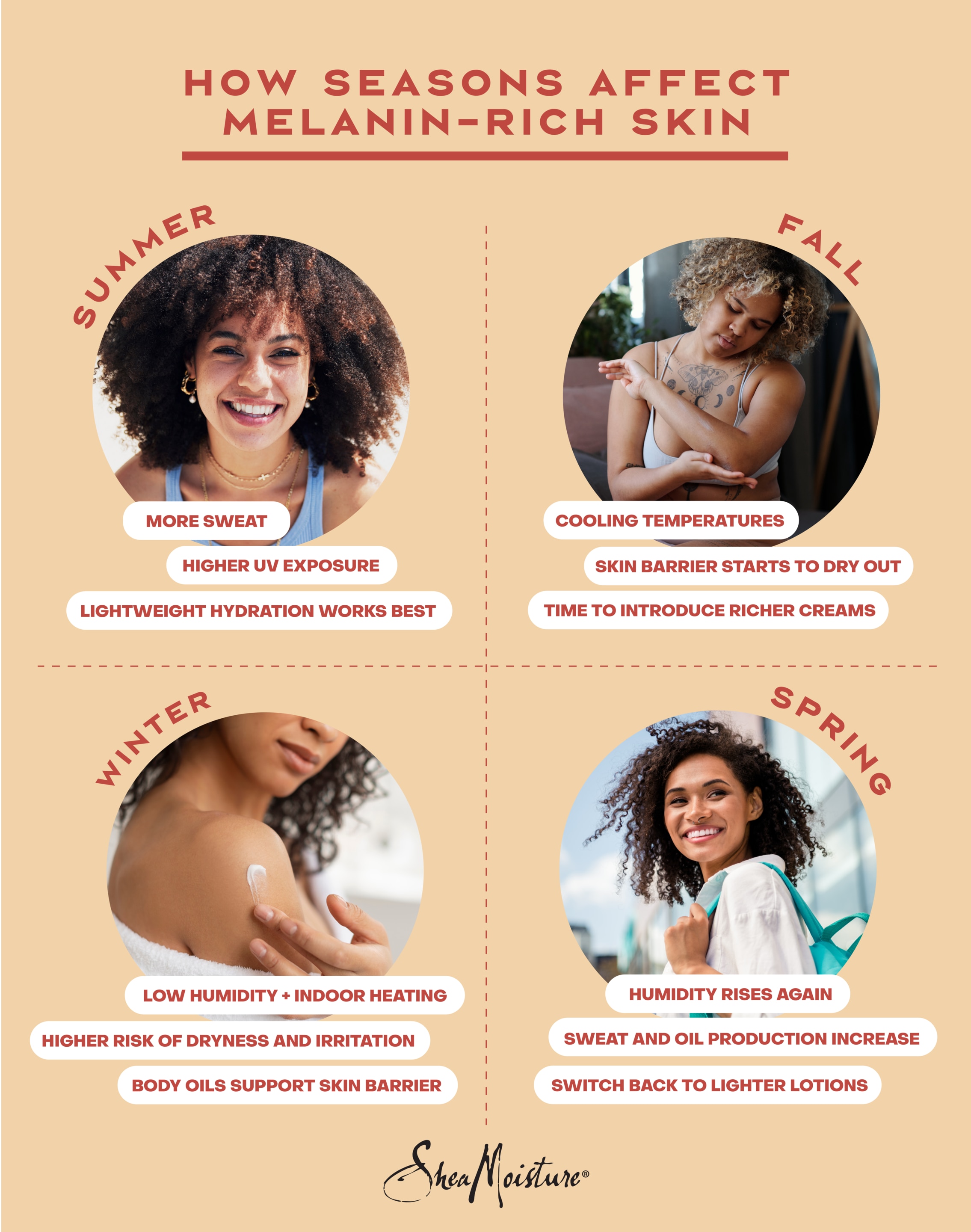
In winter, cold air and indoor heating pull moisture from the skin, often leaving it dry, tight, and itchy. Switching to richer skincare products can help combat dry winter skin by improving hydration and preventing moisture loss. Look for formulas with ingredients like shea butter, coconut oil, and aloe to replenish the skin while supporting a healthy skin barrier.
WHY YOUR SKIN NEEDS A RESET IN FALL AND SPRING
These two seasons typically fluctuate in temperature and humidity levels, and this can affect your skin's ability to retain moisture.
In fall, switching to a more nourishing moisturizer will protect your skin from the drying effects of cooler air. Creams or body butters containing shea butter, ceramides, and nourishing oils help strengthen your skin barrier and reduce water loss.1
In spring, as humidity increases, lighter lotions are more suitable. Tweaking your routine during these seasonal transitions can help prevent irritation and maintain a healthy glow.
HOW LAYERING AFFECTS SWEAT AND IRRITATION
When it gets colder, the layers pile on. But did you know it can impact your skin's health? Layering traps heat close to the body, which can increase sweating even in colder weather. When that sweat gets trapped against the skin, it can lead to irritation, congestion, and breakouts.
“Clothing doesn’t just absorb sweat; it changes the climate sitting on top of your skin, which determines how much your body sweats,” says Unilever R&D scientist, Matt Annecharico. “Breathable fabrics and natural fibers allow for more evaporation, while clothing that is synthetic and fits tightly, doesn’t allow for as much evaporation. This means more sweat can occur, but it will have less opportunity to cool you down.”
To minimize this, choose breathable fabrics and avoid overly tight layers where possible. You may also need to adjust the strength or format of your deodorant to better manage the changes in sweat levels.
WHEN IT’S TIME TO SWITCH YOUR DEODORANT
Seasonal changes can influence how your body responds to deodorants. In summer, you need a stronger formula to handle increased sweating, but winter calls for a gentler option. If you notice sweating in areas like your inner thighs, under your breasts, and skin folds, a whole-body deodorant can help keep you feeling fresh.
A gentle cleansing routine, no matter the season, keeps your skin balanced. Choose a moisturizing body wash that cleans without stripping your skin barrier—especially if you’re showering more often in warmer weather. Creamy formulas, like SheaMoisture Coconut & Hibiscus Body Wash, help remove sweat and buildup while supporting skin hydration.
WHY YOU NEED RICHER CREAMS IN COLDER WEATHER
As temperatures drop, your skin needs a little extra nourishment. Rich body creams help restore moisture to combat dry winter skin and support barrier repair, keeping your skin healthy and resilient. Look for products with ingredients like shea butter, cocoa butter, or jojoba oil, which provide lasting moisture without feeling greasy For the best results, apply these richer moisturizers immediately after showering to lock in hydration and keep your skin soft all winter.
FAQs
Should I change my skincare routine in winter?
Yes, in winter your skin needs richer, more hydrating products. Cold, dry air can strip moisture from your skin, so swapping to creams that lock in hydration helps prevent dryness, irritation, and dullness.
Why does my skin get drier in colder months?
Cold air and indoor heating can strip moisture from your skin, leading to dryness and irritation.
Do I need a different deodorant in summer vs. winter?
Yes, seasonal changes can affect sweat levels, so adjusting your deodorant strength or format can help maintain comfort.
How can I protect my skin barrier during seasonal changes?
Use products that repair the skin barrier and provide enough hydration to prevent irritation and dryness.
Adapting your skincare routine to seasonal changes doesn't have to be complicated. Once you know how these shifts affect melanin-rich skin, it’s easier to make changes to keep your skin barrier strong, hydrated, and glowing.
In summer, focus on lightweight hydration and sun protection. As fall approaches, gradually introduce richer moisturizers and barrier-repairing products. Simple, intentional tweaks protect your skin through changing weather, letting you embrace each season and celebrate your skin’s unique beauty with confidence.
Sources
More articles
Dive into more self-care tips and how-to guides.



- slide 1
- slide 2
- slide 3