


SUMMER MELANIN HYPERPIGMENTATION: WHAT HEAT AND SUN DO TO YOUR SKIN
In this article
Summer brings outdoor brunches, beach days, and more time in the sun. But it can also reveal changes in your skin, including areas that seem darker or less even in tone.
For melanin-rich skin, hyperpigmentation often becomes more noticeable during the summer months.
Understanding what’s happening beneath the surface is the first step. Add the right skincare habits, and you can support your skin throughout the season, while maintaining a more even, balanced complexion.
What is melanin hyperpigmentation of skin?
Melanin is the natural pigment that gives skin its color, and it plays a powerful protective role by helping shield skin from the sun’s UV rays.¹ Melanin hyperpigmentation happens when certain areas of the skin produce more pigment than the surrounding skin, creating darker spots. This can be caused by the sun or by your hormones.¹
One common type occurs after skin trauma like acne or ingrown hairs. The skin makes extra melanin as part of the healing process, and this is called post-inflammatory hyperpigmentation (PIH).2
Common triggers include:
- Shaving irritation
- Friction between skin folds
- Breakouts or ingrown hairs
- Harsh or sensitizing products
- Heat- or sweat-related inflammation
These triggers can lead to dark marks and uneven skin tone, especially in high-contact areas like the inner thighs, underarms, and neck.
WHY HYPERPIGMENTATION IS MORE NOTICEABLE IN SUMMER
So why does hyperpigmentation in the summer seem to show up or deepen existing marks? A few factors work together to cause this.
UV exposure increases melanin production
Sunlight activates melanocytes, the cells responsible for producing pigment. When skin is exposed to UV rays, these cells produce more melanin as a natural defense.
Heat amplifies inflammatory responses
High temperatures increase blood flow and can stimulate inflammatory responses in the skin. Inflammation, in turn, signals melanocytes to produce even more pigment. This cycle is a major contributor to melanin hyperpigmentation in summer.
“Due to higher melanin levels in melanin-rich skin, it makes melanocytes more responsive or reactive to various stresses on the skin like UV exposure,” says R&D Manager Bivash Dasgupta.
Skin balance gets disrupted by sweat and buildup
When sweat combines with bacteria, friction, or clogged pores, it can irritate the skin and trigger inflammation. This is why a consistent, gentle body care routine becomes even more important during summer.
HOW FRICTION MAKES THINGS WORSE
Tight clothing and increased heat in areas where the body naturally folds can add up to friction. Repeated rubbing in these areas can compromise the skin barrier and cause low-grade, persistent inflammation.
In time, this inflammation can lead to melanin hyperpigmentation of skin, especially in those already sensitive spots.
Sweat makes things worse by:
- Softening the skin and increasing friction damage
- Trapping bacteria and oils against the skin
- Contributing to clogged pores and follicle irritation
Keeping these areas clean, moisturized, and protected from friction is one of the most effective things you can do.
CAN DEODORANT CAUSE DARK UNDERARMS?
Deodorant doesn’t directly cause dark underarms, but certain ingredients in it can irritate the skin. “Underarm pigmentation can be due to post-inflammatory hyperpigmentation from irritation after shaving, trapped wetness, or using products incompatible with the skin,” explains R&D Manager Jamie Regan. Here’s what to watch out for:
- Alcohol-based formulas that dry out and sensitize the skin
- Added fragrances that irritate delicate underarm skin
- Frequent shaving combined with product buildup
Choose a gentle, alcohol-free deodorant and support your underarms with nourishing cleansers. SheaMoisture Raw Shea Butter Deeply Moisturizing Body Wash helps cleanse thoroughly without stripping the skin's natural moisture, which is exactly what sensitive areas need.
HOW TO PREVENT HYPERPIGMENTATION IN SUMMER
Looking after melanin-rich skin in summer comes down to these key steps:
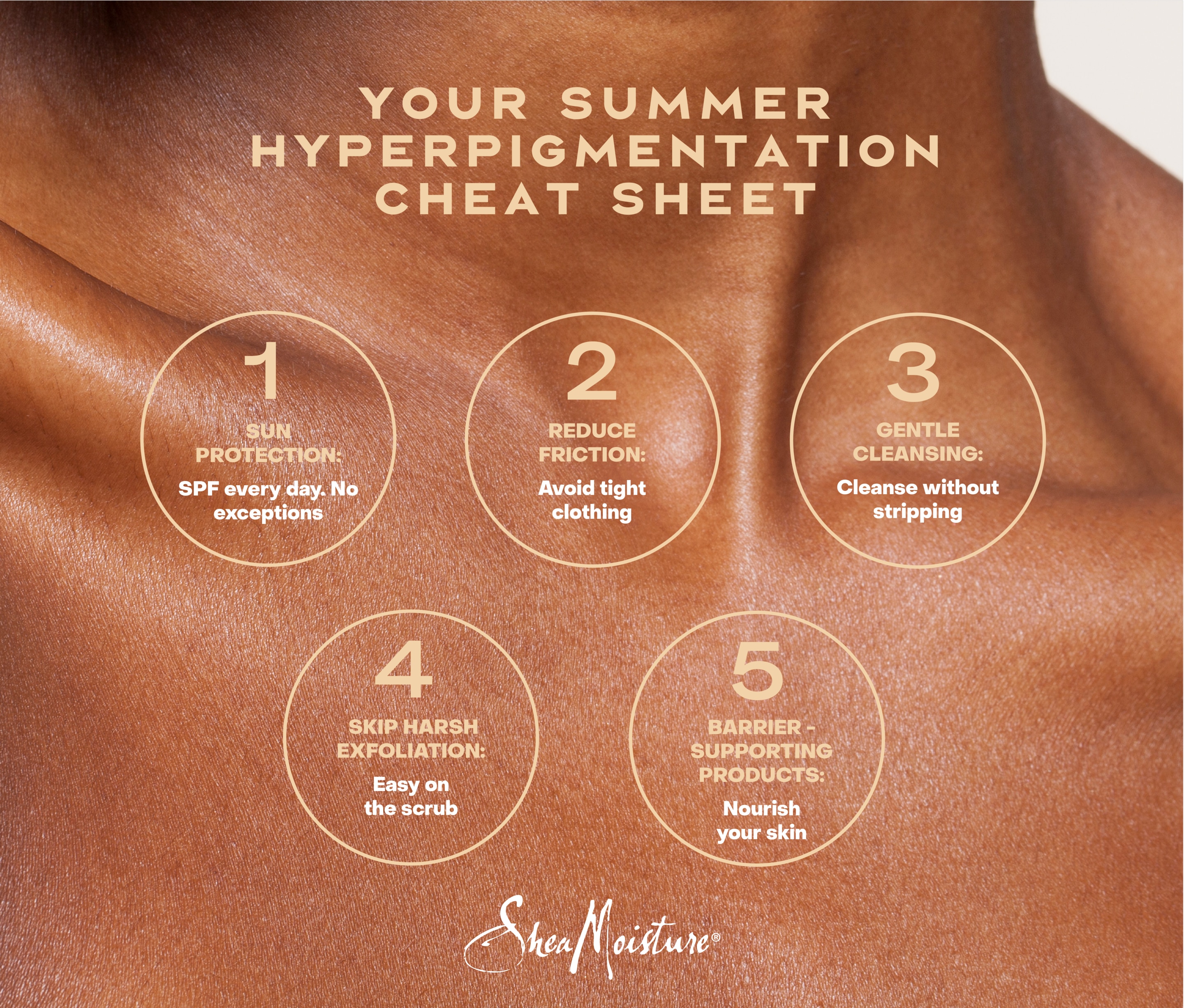
- Use daily protection from the sun: Sunscreen helps prevent UV-triggered pigment production that deepens existing marks. Make it an essential part of your routine, even on cloudy days.
- Reduce friction in high-contact areas: By wearing breathable fabrics like cotton or moisture-wicking materials, you can reduce rubbing and heat buildup in sensitive zones.
- Cleanse gently and consistently: Remove sweat and buildup without disrupting your skin barrier by using a mild, nourishing cleanser.
- Skip the harsh exfoliation: Over-exfoliating can cause inflammation and worsen melanin hyperpigmentation. Less is more.
- Include soothing, barrier-supporting products: Ingredients like shea butter, aloe, and plant oils help strengthen the skin barrier and calm sensitivity, protecting your skin from environmental stressors.
WHY HYDRATION IS ESSENTIAL
Moisture retention plays an important role in managing hyperpigmentation. When the skin barrier is dry, it’s compromised, making it more vulnerable to friction, irritation, and inflammation, all of which can trigger pigment changes. Well-hydrated skin is more resilient. It recovers faster from minor irritation and is better able to maintain an even, healthy-looking tone over time.
SheaMoisture 100% Virgin Coconut Oil Daily Hydration Body Lotion is ideal for keeping skin soft and hydrated in hot weather. Packed with nourishing oils and butters, it helps support the skin barrier while still feeling light.
A SUMMER BODY CARE ROUTINE BUILT FOR MELANIN-RICH SKIN
Consistency is everything. Here's how to build a routine that works for you:
1. Start with a gentle, hydrating body wash
Cleanse sweat and buildup after a hot day. SheaMoisture African Black Soap Bar gently does the job while calming stressed skin.
2. Moisturize right after showering
Apply a nourishing body moisturizer while your skin is still slightly damp to seal in hydration and strengthen your skin barrier.
3. Choose deodorants that support your skin
Look for alcohol-free formulas that control odor without irritating the underarm area.
4. Dress with your skin in mind
Loose, breathable clothing reduces friction in sensitive areas, especially in summer heat.
5. Apply sunscreen every day
This is the simplest way to keep existing pigment from darkening in the sun.
Together, these habits build a strong foundation for healthier-looking skin and help minimize the factors that cause melanin hyperpigmentation.
FAQs
Why does hyperpigmentation get worse in summer?
Increased sun exposure, heat, and inflammation can cause the body to create extra melanin. This is why hyperpigmentation in summer tends to be more noticeable if you have melanin-rich skin.
How do I reduce friction marks in hot weather?
Choose breathable fabrics that allow air to circulate, keep your skin well-hydrated to minimize irritation, and reduce rubbing in sensitive areas like the inner thighs and underarms.
What summer body care routine is best for melanin-rich skin?
A summer routine built around gentle cleansing, daily moisturizing, sun protection, and barrier-supportive products goes a long way toward maintaining even-looking skin and reducing triggers for hyperpigmentation.
Can deodorant darken my underarms?
Not on its own. Irritation from ingredients or shaving can trigger hyperpigmentation. To protect your underarms, stick to gentle, fragrance- and alcohol-free formulas, and keep skin clean and nourished.
Melanin hyperpigmentation is common and can be more visible in summer, but how you care for your skin makes all the difference. With a routine that protects, soothes, and supports your natural barrier, you can minimize pigment changes and enjoy summer feeling confident and comfortable in your skin.
References
Dive into more self-care tips and how-to guides.


- slide 1
- slide 2
- slide 3