


HOW TO GET RID OF OILY SKIN: YOUR DAILY ROUTINE UPGRADE

That shine by midday isn't your skin working against you. It's doing exactly what it's designed to do. Oil keeps your skin protected and balanced; it's only when there's too much of it that things start to feel slick, congested, or hard to manage.
Let’s look at what causes oily skin, how to recognize it, and a simple daily routine that keeps oil in check.
WHY DOES YOUR SKIN MAKE OIL?
Your sebaceous (oil) glands produce an oily substance called sebum that keeps your skin lubricated, locks in moisture, and helps guard against everyday stressors. Without sebum, your skin would be dry, fragile, and more prone to irritation.
The issue isn't sebum itself. It's too much of it. That's when you start noticing the shine, the slick feel by midday, and the clogged pores that come with oily skin.
So the goal isn't to strip your skin of oil; it's to help it produce just the right amount, keeping your skin barrier intact along the way.
SEBACEOUS GLANDS AND THE T-ZONE EXPLAINED
Sebaceous glands are tiny oil-producing glands found in almost every hair follicle across your skin. They produce and release sebum onto the skin’s surface and are more concentrated in some areas than others.
The face has the highest density, especially the forehead, nose, and chin. This is an area called the T-zone. The chest and upper back are next in line, and that’s why breakouts often show up there too. Hands, feet, and lower legs have very few sebaceous glands, and that’s why these areas tend to get dry.
WHAT CAUSES OILY SKIN?
There are several reasons why you may have oily skin. Here are the most common ones:
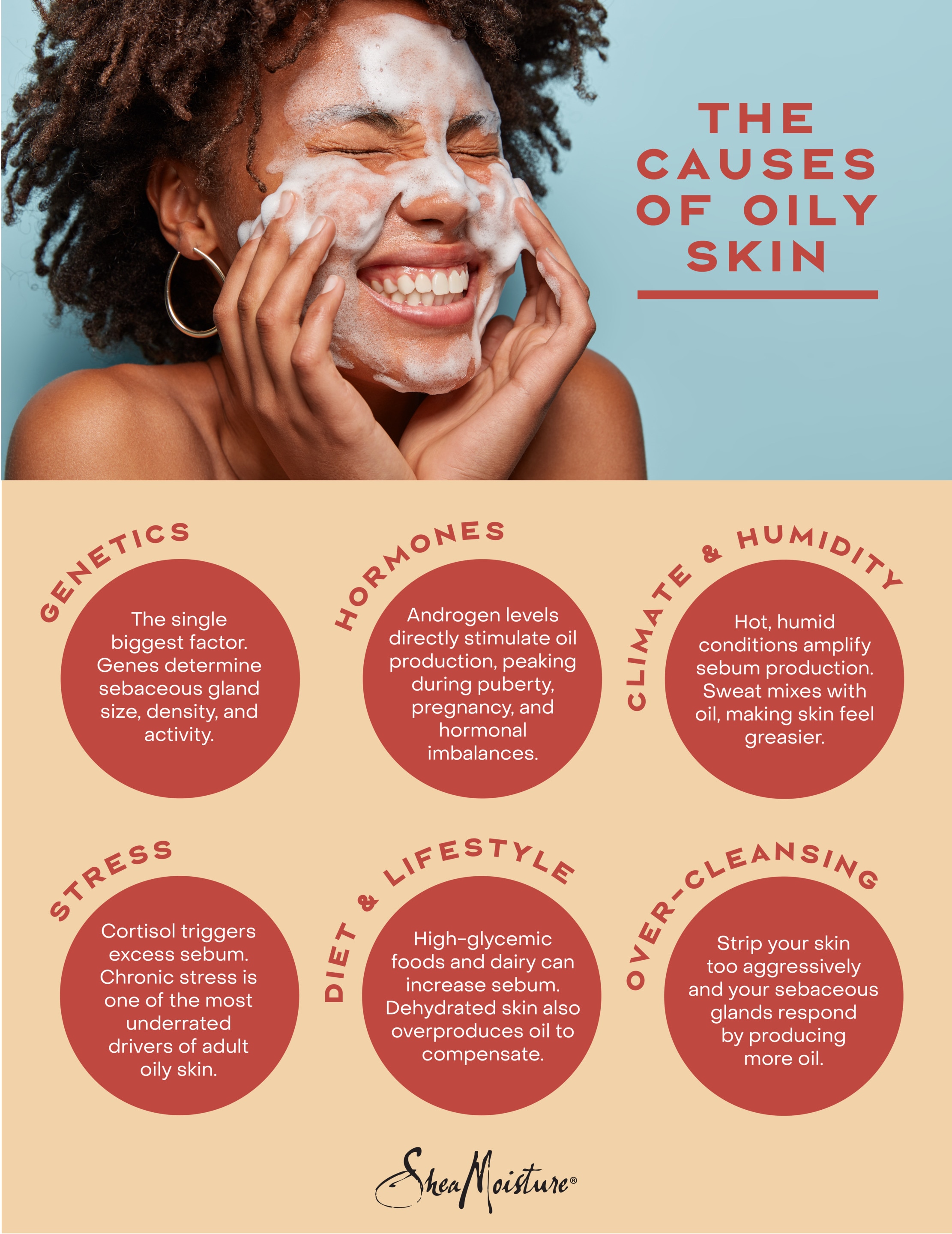
- Genetics. The single biggest factor. If your parents had oily skin, you likely will too. Your genes determine sebaceous gland size, density, and activity.
- Hormones. Sebum production is hormone-driven. Androgens, the hormones that naturally rise and fall throughout your life, signal your oil glands to work harder. That's why oily skin often shows up during puberty, around your period, during pregnancy, or if there’s a hormonal imbalance.
- Climate and humidity. Hot, humid conditions amplify sebum production. People in warmer climates or during summer months typically experience oilier skin.
- Stress. Chronic stress is one of the most underrated reasons for oily skin in adults. When you’re stressed, your body produces higher levels of stress hormones, which can increase oil production, making your skin more prone to breakouts.1
- Diet. Foods that spike your blood sugar quickly, like white bread, sugary snacks, and sweetened drinks, along with dairy, have been linked to increased sebum in some people.2 Dehydrated skin can also overproduce oil to compensate for the lack of moisture.
- Over-cleansing. Cleanse your skin too aggressively, and the sebaceous glands often respond by producing more oil. This is exactly why the ‘balance, don’t strip’ approach matters.
HOW CAN YOU TELL IF YOU HAVE OILY SKIN?
Here are a few signs to look out for:
- The shine test. By midday, your T-zone looks visibly shiny even though you cleansed that morning. That’s classic oily skin.
- Pore visibility. Enlarged, visible pores, especially around the nose and cheeks. That’s because excess sebum widens pores over time.
- Frequent breakouts. Too much oil clogging pores can lead to blackheads, whiteheads, and acne.
- Makeup slides off. A foundation that fades or starts slipping by lunchtime is a sign.
- Skin feels slick, not tight. If your skin feels slick even after washing, you’re oily. If it feels tight, you could be dry or dehydrated, even if you look oily on the surface.
A DAILY ROUTINE FOR OILY SKIN
Knowing how to control oily skin without making the problem worse comes down to a consistent, gentle routine. Product choice is also important. When your skin is stripped because of a harsh product, that’s when more oil production is triggered.
“Harsh surfactants in bars and body washes can leach out skin oils and damage the outer layer of the skin, causing dryness and irritation,” says Unilever R&D Manager Bivash Dasgupta.
A surfactant is any ingredient that helps water mix with oil, allowing dirt, sweat, and sebum to be washed away. Sulfates are a kind of surfactant, so it’s best to avoid harsh sulfate-heavy formulas.
Here’s a six-step routine designed to tackle oily skin:
- Cleanse twice daily, gently. Morning and evening, use a cleanser designed for oily or combination skin. Try SheaMoisture African Black Soap Bamboo Charcoal Detoxifying Facial Wash, formulated for oily to combination skin with bamboo charcoal and tamarind extract, it purifies skin without drying it out.
- Use toner (optional). If your skin feels congested, a clarifying toner with mild acids like salicylic acid and niacinamide helps reduce excess oil and refine the appearance of pores. Skip this step if your skin is sensitive.
- Treat with a targeted serum. A niacinamide-based serum reduces sebum over time without stripping your skin. Salicylic acid targets blackheads and clogged pores. Use 2-3 times a week, not daily, to avoid over-irritation.
- Moisturize. Yes, even if you have oily skin. Skipping moisturizer signals your skin to produce more oil to compensate. Use one with a lightweight, non-comedogenic gel or lotion texture.
- Apply SPF every morning. Look for broad-spectrum SPF 30+, oil-free, gel-based, or matte finish sunscreens that won’t add shine.
- Exfoliate gently only 1-2 times a week. Products with AHA or BHA remove dead skin without the rough scrubbing, making them gentler for most people. Try SheaMoisture African Black Soap Clarifying Facial Wash & Scrub, which doubles as a gentle exfoliating wash for oily skin.
MANAGING OILY BODY SKIN
Oily body skin shows up most on the chest, back, and shoulders, areas with a high concentration of sebaceous glands. Clothing traps sweat and oil against the skin, so it's no surprise these zones are also prone to body acne.
- Shower daily, especially after sweating. Use a gentle body wash formulated for oily or acne-prone skin. Try SheaMoisture African Black Soap Calm & Clearing Body Wash to cleanse your skin effectively while soothing it at the same time.
- Don’t skip body moisturizer. Body skin that gets stripped overcompensates with more oil. Use a lightweight lotion on damp skin after showering. Try: SheaMoisture African Black Soap Balancing Moisturizer.
- Exfoliate 1-2 times a week. A gentle body scrub on the chest, back, and shoulders removes the dead skin that traps oil in pores. Try SheaMoisture African Black Soap Calm & Clearing Shea Sugar Scrub.
- Wear breathable fabrics. Cotton, linen, and merino wool let your skin breathe. Avoid synthetic fabrics that trap sweat and oil against the skin.
- Address back acne. Look for body washes with salicylic acid or tea tree oil.
DAILY HABITS TO HELP MANAGE OILY SKIN
- Stay hydrated. Dehydrated skin overcompensates with more oil. Drink water consistently throughout the day.
- Limit hot showers. Hot showers can strip away your skin's natural oils, making it feel dry and irritated.
- Check your diet. High-glycemic foods and dairy can trigger excess sebum. Try cutting back for 2-4 weeks to see if it makes a difference for your skin.
- Manage stress. Prioritizing good sleep, regular exercise, and stress management may help keep your skin more balanced.
- Wash pillowcases weekly. Oil and bacteria transfer from your face to your pillowcase and back. Clean pillowcases can help prevent breakouts.
- Try not to touch your face. Your hands pick up bacteria from everything they touch and can transfer them onto your skin without you realizing it.
- Be patient. Skin cell turnover takes around 28 days, so real change takes time to show up. Give any new step in your routine a full cycle before deciding whether it's working for you.
FAQs
WHY IS MY SKIN SO OILY?
The most common reasons are genetics, hormones, and over-cleansing. If your parents had oily skin, there’s a strong chance you do too. And ironically, stripping your skin with harsh cleansers makes it produce more oil, not less.
WHY IS THE SKIN ON MY BODY SO OILY?
The chest, back, and shoulders have a high concentration of sebaceous glands, and these areas are often covered by clothing that traps sweat and oil. Genetics, hormones, and hot weather increase body oiliness in the same way they affect your facial skin and make it oily.
HOW DO I BALANCE OILY SKIN WITHOUT DRYING IT OUT?
Use gentle, non-stripping cleansers, always follow with a lightweight moisturizer, and avoid over-exfoliating. The goal is to reduce excess oil while keeping the skin barrier intact. When the barrier is healthy, your oil glands have less reason to overproduce.
HOW DO I STOP MY BODY FROM BEING SO OILY?
Shower daily with a gentle body wash formulated for oily skin, moisturize with a lightweight lotion, exfoliate 1-2 times weekly, wear breathable fabrics, and change clothes after being active. Look for ingredients like salicylic acid in a body wash to help manage breakouts.
CAN OILY SKIN EVER GO AWAY?
Oily skin can ease with age as oil production naturally decreases after your late 20s. But if your oily skin is genetic, it's likely just part of how your skin is built, and that's okay. The goal is just to manage it well.
HOW DO YOU TELL IF YOU HAVE OILY OR DRY SKIN?
Oily skin feels slick or shiny by midday, has visible pores, and is prone to breakouts. Combination skin has an oily T-zone with drier cheeks. Dry skin feels tight after washing, looks dull or flaky, and rarely breaks out, while dehydrated skin can look oily but will feel tight underneath.
Oily skin has a reputation it doesn't fully deserve. It's often the most resilient skin type: slower to show fine lines and less prone to sensitivity. The habits that help you manage the shine are the same ones that can protect your skin’s resilience for years to come.
REFERENCES
Dive into more self-care tips and how-to guides.



- slide 1
- slide 2
- slide 3